
Natural Sources of Vitamin D: Foods and Lifestyle Tips
Boost your Vitamin D levels naturally with simple sunlight habits and nutrient-rich foods.
In this article:
Vitamin D is one of those nutrients I didn’t pay much attention to until I noticed changes in my energy, mood, and overall well-being. Once I looked into it, I realized how valuable natural sources of vitamin D are for anyone wanting to live a healthy, active life without overcomplicating things.
In this article, I’ll share what worked for me in getting vitamin D naturally — from food and sunlight to everyday lifestyle habits.
Why Natural Sources of Vitamin D Matter
The Role of Vitamin D in the Body
Vitamin D helps the body manage calcium, which is essential for strong bones. It also supports muscle function and contributes to a healthy immune system.
Why Natural Sources of Vitamin D Matter
The Role of Vitamin D in the Body
Vitamin D helps the body manage calcium, which is essential for strong bones. It also supports muscle function and contributes to a healthy immune system.
Why Many People Don’t Get Enough
Spending long hours indoors, especially at work or school, makes it easy to fall short. Focusing on natural sources of vitamin D feels more balanced and sustainable than immediately relying on supplements.
How to Get Vitamin D Naturally
Sunlight for Vitamin D
One of the simplest ways to boost vitamin D is spending time in daylight. Exposure to sunlight allows your skin to produce vitamin D on its own.
Practical Tips for Sun Exposure
From my experience, small daily habits make a difference:
- Spend 15–30 minutes outdoors around midday
- Walk, stretch, or exercise outside
- Expose arms or legs when possible
- Consistency matters more than perfect timing.
Learn More About Sunlight and Vitamin D
For general background information, the National Institutes of Health (NIH) provides a clear overview:
Vitamin D from Food
Foods That Naturally Contain Vitamin D
Getting vitamin D from food takes some planning, but it’s easier than it seems. Instead of tracking every number, I focus on a few reliable options:
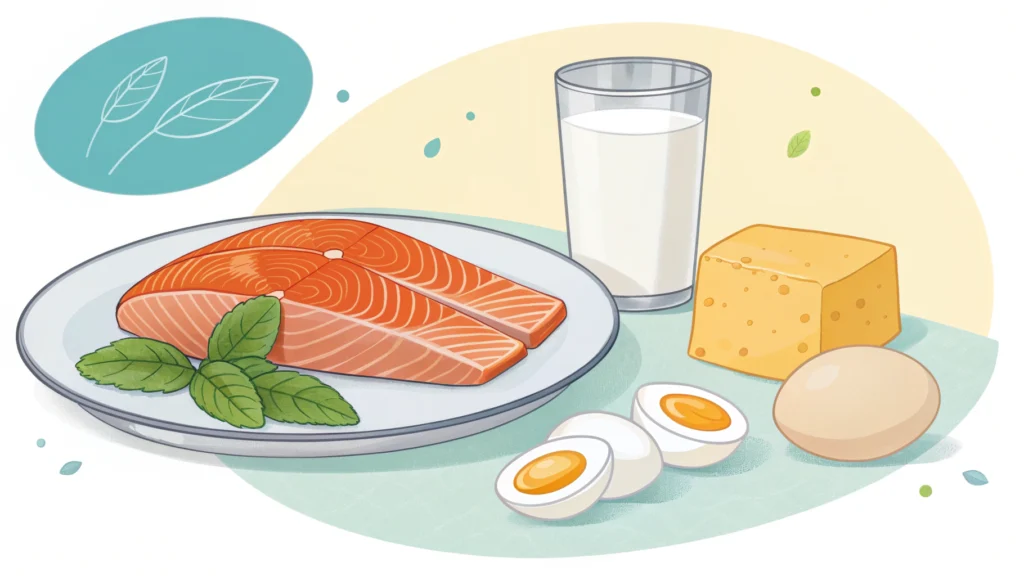
- Salmon
- Egg yolks
- Milk, plant-based alternatives, and yogurt fortified with vitamin D
- Cheese
Here’s a quick guide to the vitamin D sources shown above and how much you can get per serving:
| Food | Vitamin D Content (per serving) | Type |
|---|---|---|
| Salmon (100g) | ≈526 IU | Fatty fish |
| Egg yolk (1 large) | ≈37 IU | Egg |
| Milk (1 cup) | ≈100–120 IU* | Fortified dairy |
| Cheese (1 slice / 30g) | ≈6–12 IU | Dairy |
*Vitamin D in milk is typically added through fortification and may vary by brand.
Expert Insights
Harvard Health Publishing also notes that fatty fish is one of the most reliable dietary sources of vitamin D:
Vitamin D Lifestyle Tips
Habits That Support Vitamin D Intake
Combining food and sunlight works best with a few lifestyle habits:
- Eat meals near windows or outside when possible
- Choose outdoor workouts over indoor ones when the weather allows
- Be intentional with fortified foods
- Avoid long periods without daylight exposure
Why Small Changes Matter
These habits don’t feel restrictive. Over time, they help maintain consistent vitamin D levels without any extreme effort
Final Thoughts on Natural Sources of Vitamin D
Focusing on natural sources of vitamin D has been a simple but impactful upgrade to my lifestyle. By combining sunlight for vitamin D, smart food choices, and realistic daily habits, it’s possible to support your health without stress or extremes.
If you already care about what you eat and how you move, this is one more area where small changes can add up — naturally.