Meditation for Overthinking at Night: 5 Simple Techniques to Fall Asleep Fast
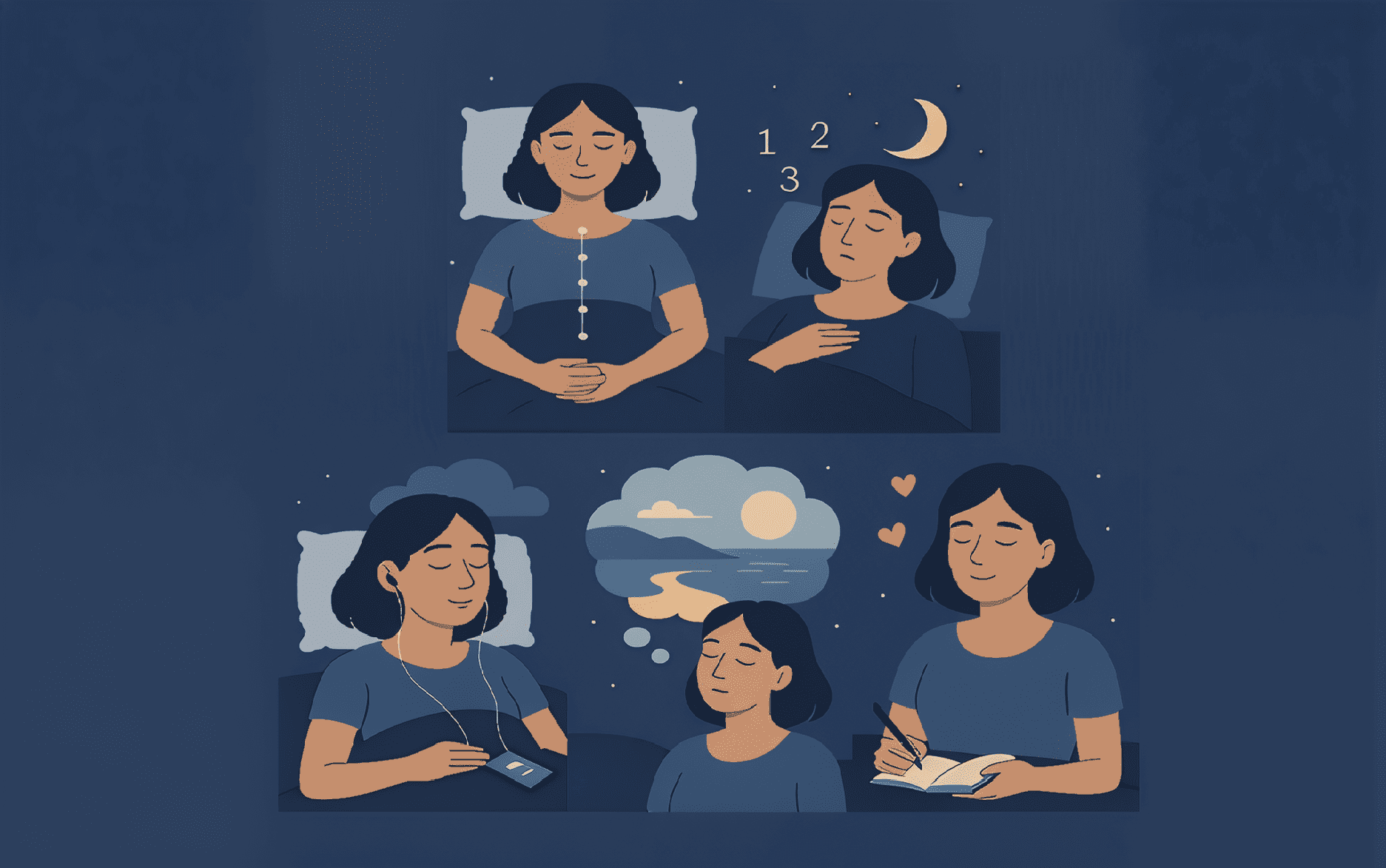
Do you find it hard to fall asleep because your thoughts just won’t quiet down at night? I’ve been there, lying in bed with racing thoughts, replaying the day and feeling more awake the harder I tried to rest. If it feels like you can’t fall asleep because of your thoughts, you’re not alone.
Meditation for overthinking at night can help break that cycle by shifting your focus and calming your body before sleep. Simple techniques like slow breathing, guided audio, or mental imagery can reduce stress and help you relax naturally.
In this guide, you’ll learn practical ways to calm your mind before sleep and fall asleep faster, even on stressful days. First, it helps to understand why your brain becomes more active at night.
Why Your Mind Won’t Slow Down at Night and How to Stop Overthinking
Have you ever noticed how your mind speeds up the moment you lie down? I used to feel exhausted all day, but at night my brain would replay conversations or plan tomorrow. The more I tried to sleep, the more awake I felt, like I simply couldn’t fall asleep because of overthinking.
When your thoughts keep racing at night, your body stays in a light alert state. I’ve found that the evenings often go more smoothly when I’ve taken a short walk earlier in the day. Fresh air and a change of scenery help me let go of some of the mental tension that builds up during busy hours, which is one reason walking for stress relief became part of my routine.
Even when I feel physically tired, my mind can still feel alert and active. This is why racing thoughts can make it harder to relax before sleep.
What helped me most was realizing that meditation for overthinking at night isn’t about forcing your mind to be quiet, but giving it something steady to focus on. Simple practices like breathing exercises for sleep anxiety or guided relaxation can interrupt overthinking and help your body settle.
Research from the National Institutes of Health and the Mayo Clinic shows that mindfulness can reduce stress, support your nervous system, and improve sleep quality.
In simple terms, it helps you:
Even a few minutes before bed can make a real difference, especially if you’re trying to figure out how to fall asleep fast when overthinking.
Simple Meditation Techniques to Help You Relax at Night
If your thoughts won’t slow down at night, you don’t need a complicated routine. A few simple techniques can help you relax and fall asleep faster without pressure. Start with one that feels natural and keep it simple.
1. Mindful Breathing to Calm Racing Thoughts Before Sleep
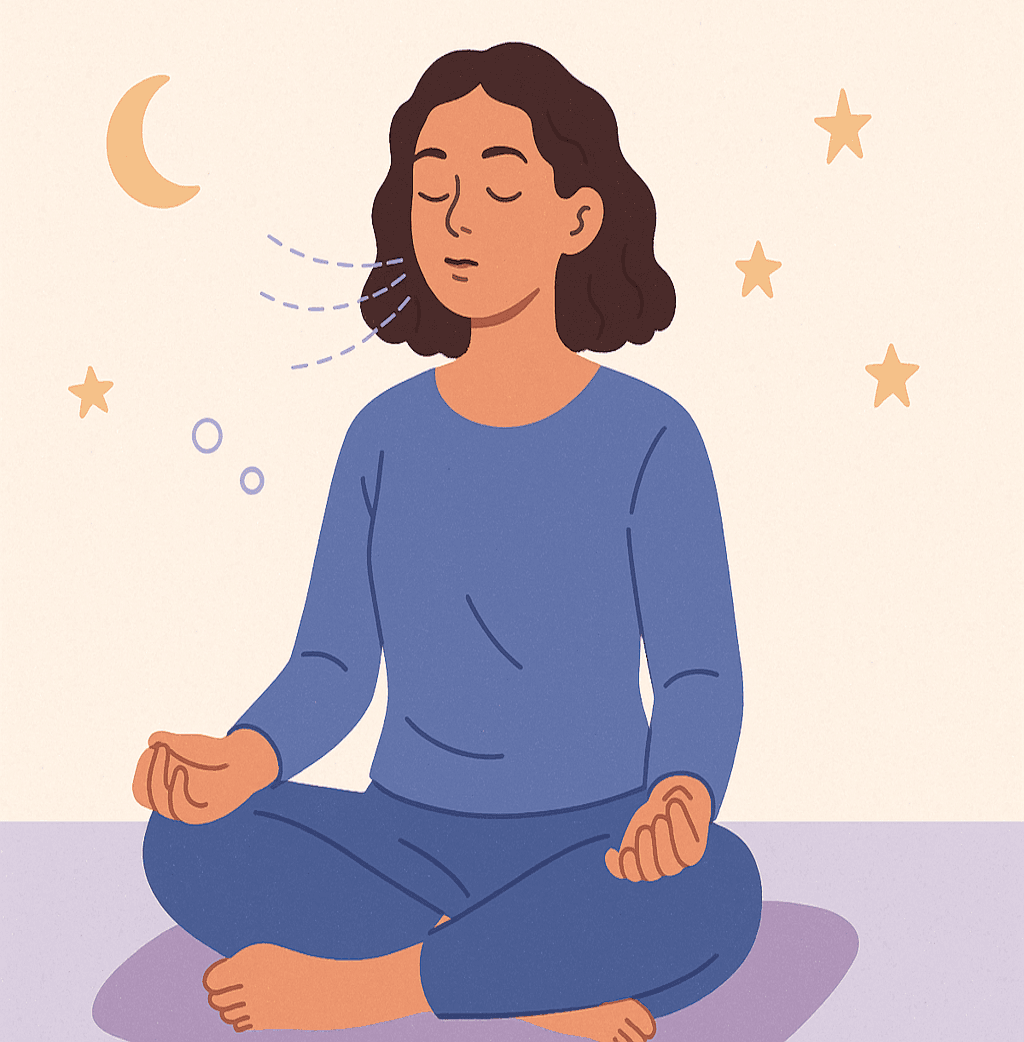
Mindful breathing is one of the simplest ways to calm your thoughts and ease into sleep, especially if you’re dealing with overthinking at night.
Best for: racing thoughts, anxiety, falling asleep faster
How to practice:
Lie comfortably in bed and close your eyes. Inhale slowly through your nose for a count of four, then exhale gently through your mouth for a count of six. Focus your attention only on your breath.
Why it works:
Slow, steady breathing activates your body’s relaxation response, lowering your heart rate and easing mental tension. This helps interrupt overthinking and makes it easier to drift into sleep naturally.
2. Body Scan Meditation to Release Tension and Relax Your Body
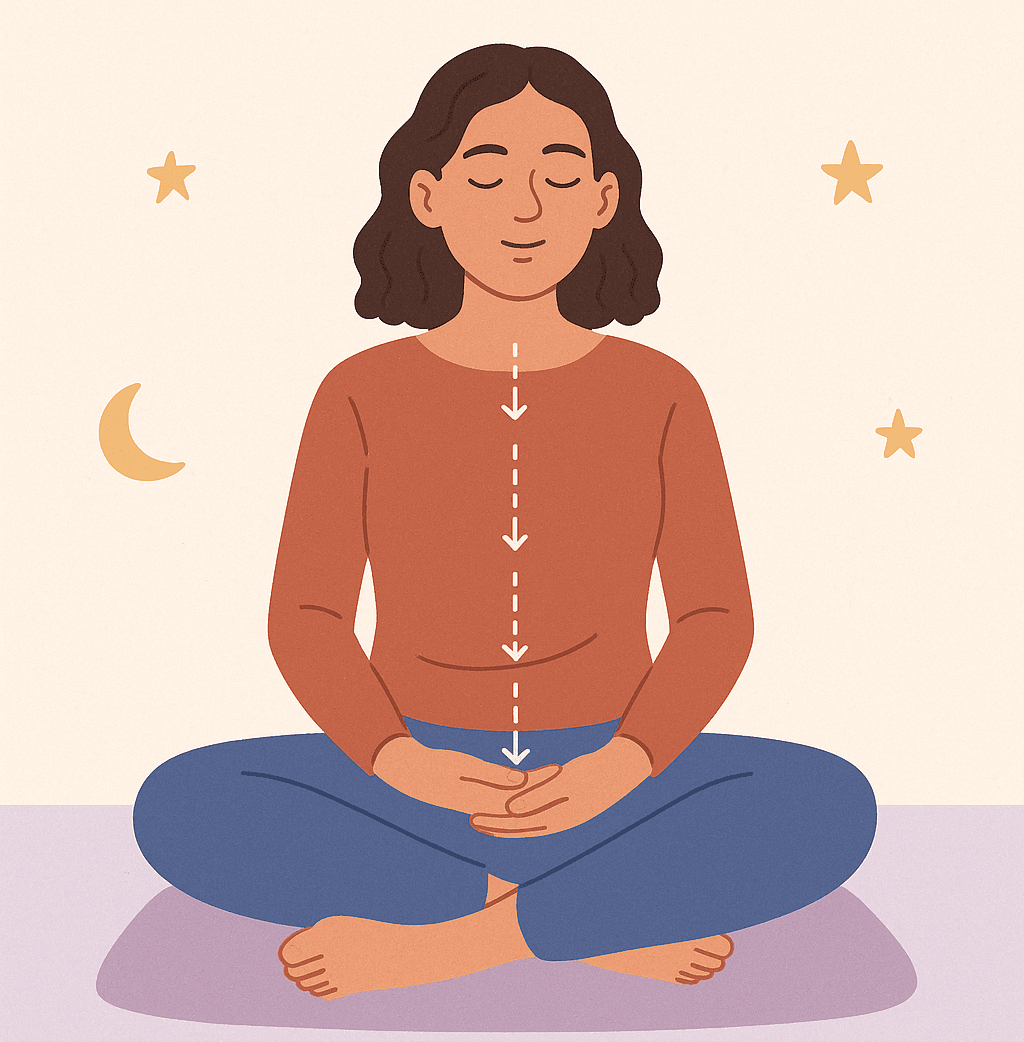
A body scan is one of the easiest ways to relax when your body feels tense and your thoughts won’t settle.
Best for: physical tension, restlessness, stress after a long day
How to practice:
Lie comfortably in bed and bring your attention to your feet. Slowly move your focus upward through your legs, hips, torso, arms, neck, and head. When you notice tension, pause, take a slow breath, and let that area soften.
Why it works:
Shifting your attention to physical sensations helps pull you out of racing thoughts. As your body relaxes, your nervous system starts to slow down, making it easier to unwind and fall asleep naturally.
3. Counting Breaths to Stop Overthinking Loops
If your thoughts keep looping when you’re trying to fall asleep, counting breaths can help break that cycle.
Best for: repetitive thoughts, overthinking, trouble switching off
How to practice:
Silently count each breath — inhale “one,” exhale “two” — up to ten, then gently start again. If your attention drifts, just return to one without overthinking it.
Why it works:
Counting gives your brain a simple, steady task. This reduces mental noise, interrupts repetitive thinking, and helps your body relax so you can fall asleep more easily.
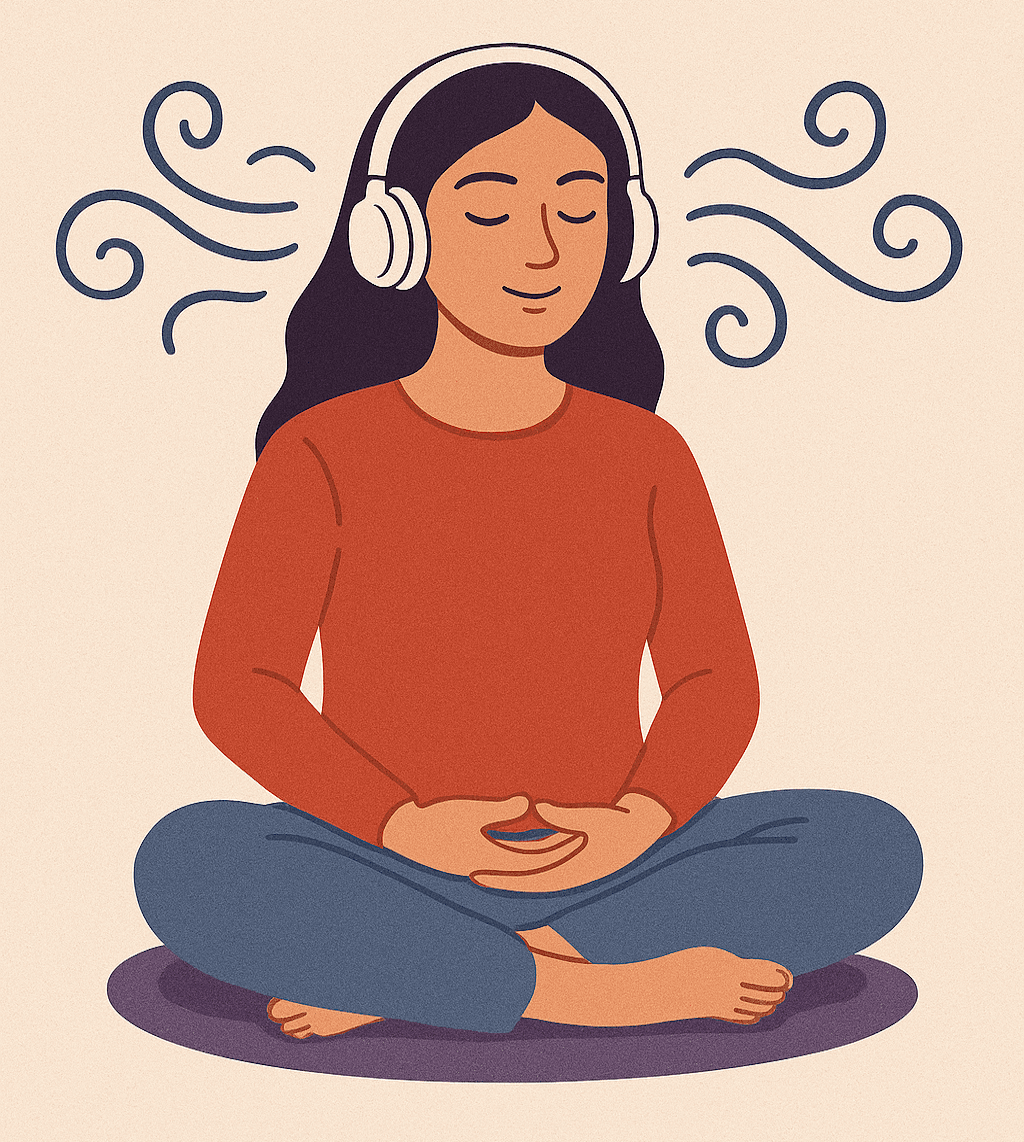
4. Guided Meditation for When Your Thoughts Feel Overwhelming
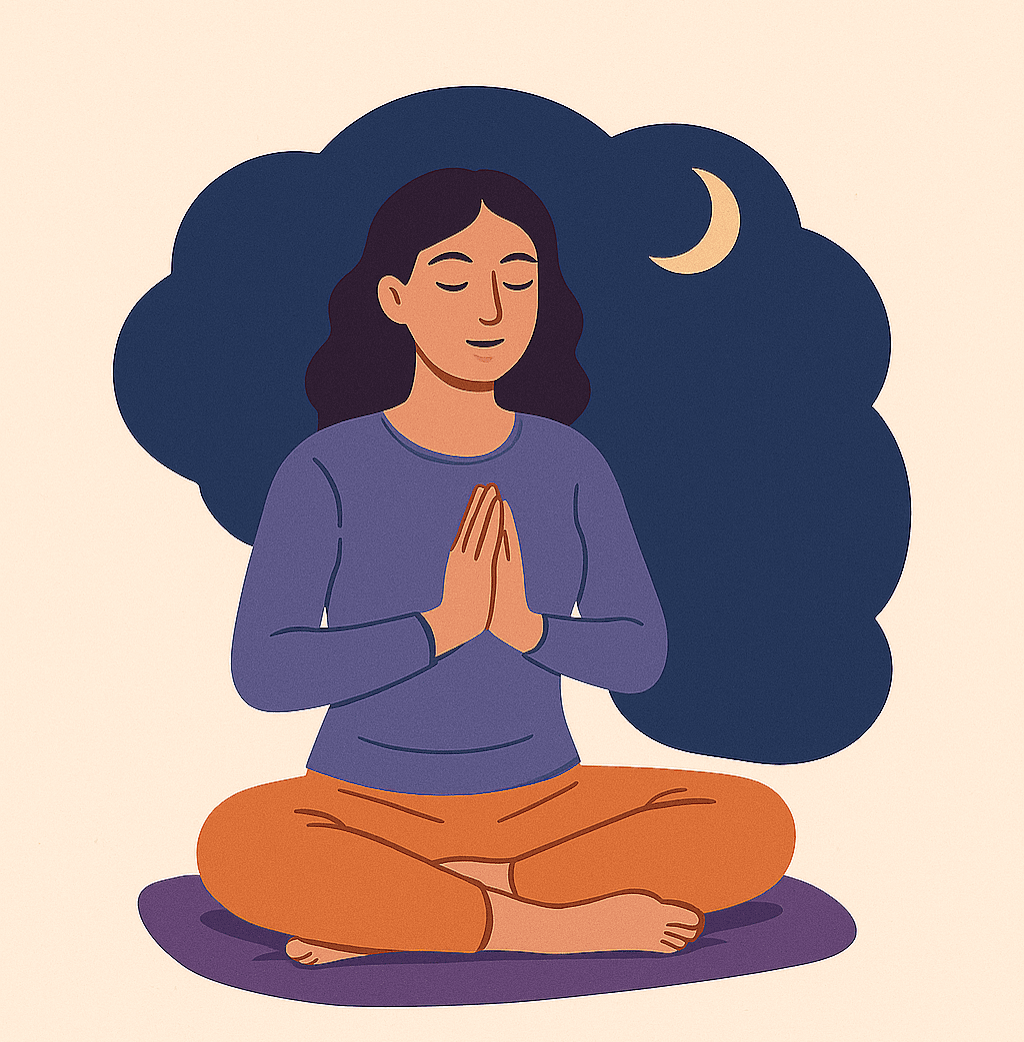
If it’s hard to switch off or focus by yourself, guided meditation can make the process much easier. Some people also combine meditation with essential oils for stress relief and better sleep as part of their evening routine.
Best for: beginners, anxiety, when your thoughts feel overwhelming
How to practice:
Use a guided audio or app designed for relaxation. Choose a calm voice or soft background sounds and simply follow along without trying to control the process.
Why it works:
You don’t have to figure anything out. Listening gives your attention something steady to follow, which helps quiet mental noise and allows your body to relax naturally.
5. Visualization to Shift Your Focus and Ease Stress
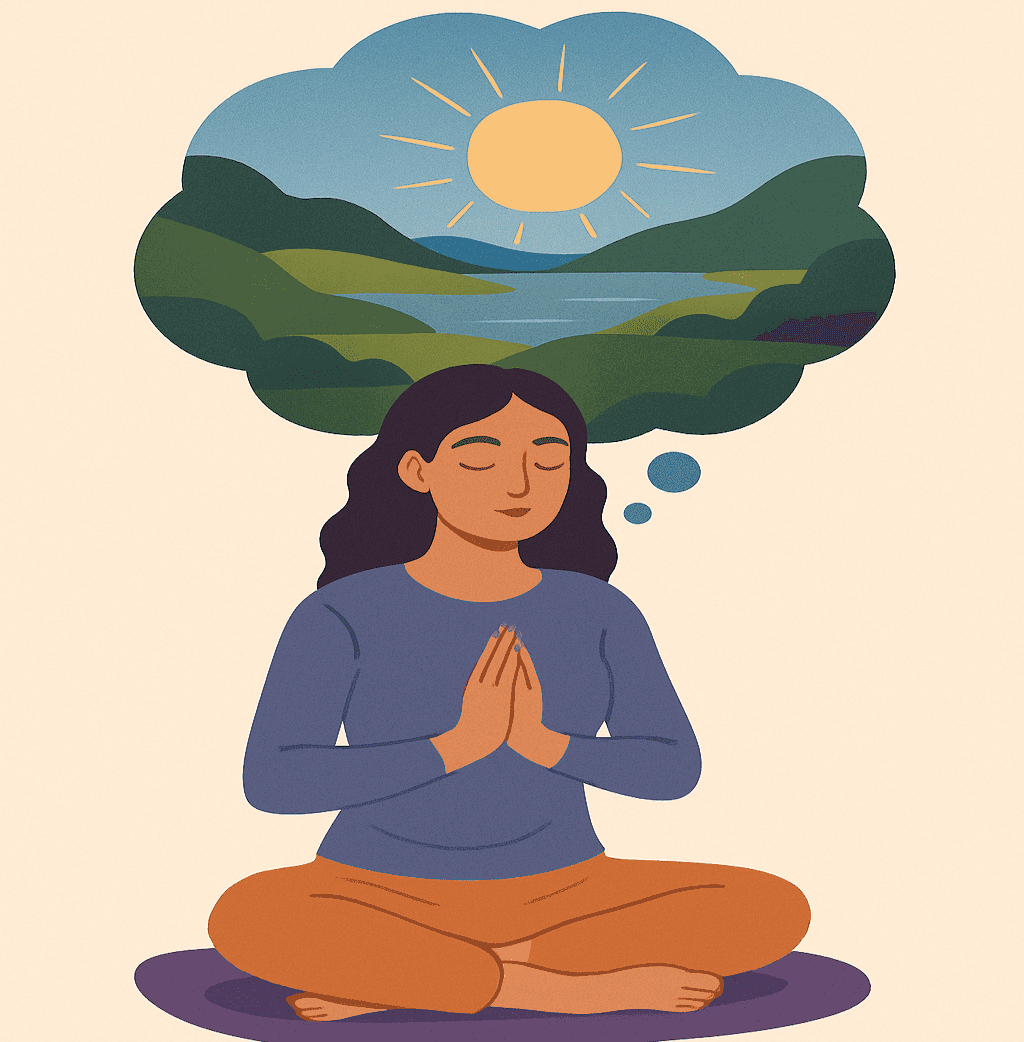
Visualization helps you move away from stressful thoughts by replacing them with calming mental imagery.
Best for: stress, mental overload, difficulty unwinding
How to practice:
Imagine a peaceful place, like a quiet beach or forest. Try to picture the details, including sounds, colors, and sensations, as clearly as possible.
Why it works:
Engaging your senses gives your attention something immersive to focus on. This gently pulls you away from stress and makes it easier to settle into a calmer state.
Meditation Techniques Compared: What Works Best for You
Here’s a quick comparison of the most effective techniques to help with meditation for overthinking at night, so you can choose what works best for you.
| Meditation Technique | Best For (Common Sleep Problems) | Time Needed | Difficulty Level | Main Benefit |
|---|---|---|---|---|
| Mindful Breathing | Stress, anxiety, racing thoughts | 2–5 min | Easy | Calms thoughts quickly |
| Body Scan Meditation | Physical tension, restlessness | 5–10 min | Easy | Releases body tension |
| Counting Breaths | Overthinking at night, looping thoughts | 3–5 min | Very easy | Interrupts mental loops |
| Guided Meditation | Beginners, anxiety, trouble switching off | 5–15 min | Very easy | No effort needed |
| Visualization | Mental stress, difficulty unwinding | 5–10 min | Medium | Shifts focus gently |
From my experience, there’s no one “perfect” technique. What worked best for me was trying a couple of options and sticking with the one that felt easiest on a given night. On more stressful days, simple breathing or counting helped me calm down faster, while body scan or visualization worked better when I felt tense.
How to Build a Simple Evening Routine for Better Sleep
The biggest shift for me wasn’t finding the “perfect” meditation technique. It was creating a small routine my body could recognize every night.
What’s keeping you awake tonight?
Best Tonight:
- Slow breathing for 2–5 minutes
- Counting breaths to interrupt thought loops
- Short guided meditation before sleep
Best Tonight:
- Body scan meditation
- Gentle stretching
- Progressive muscle relaxation
Best Tonight:
- Guided meditation with calming audio
- Extended exhales
- Dim lighting before bed
Best Tonight:
- Visualization techniques
- Nature sounds or ambient audio
- Putting your phone away for 10 minutes
I’ve also realized that calm evenings are usually built during the whole day, not only in the few minutes before sleep. Small routines can make stressful moments feel more manageable and help create a sense of balance. I shared more ideas in my guide to small habits for stressful days that make everyday life easier.
Meditation became one of those simple habits that helped me slow down when my thoughts felt overwhelming. It doesn’t make every stressful day disappear, but it gives me a quiet moment to reset and prepare for better rest.
📚 Learn More from Trusted Sleep & Health Sources
FAQ: Meditation for Overthinking at Night
Still have questions about meditation for overthinking at night? Here are simple answers that can help you sleep better.
Can meditation really help with overthinking at night?
Yes, meditation can help reduce overthinking by shifting your attention away from repetitive thoughts. Techniques like breathing exercises, guided meditation, and body awareness help calm your nervous system, making it easier to relax and fall asleep naturally.
What is the best meditation for racing thoughts before bed?
The best technique depends on how you feel.
For anxiety → mindful breathing
For tension → body scan
For looping thoughts → counting breaths
For beginners → guided meditation
Most people find that simple techniques work best when done consistently.
How long should I meditate before sleep?
You don’t need much time. Even 5–10 minutes of meditation before bed can help calm your mind, reduce stress, and improve sleep quality. The key is consistency, not duration.
Why does my mind become more active at night?
At night, external distractions decrease, so thoughts become more noticeable. Stress can also keep your nervous system alert, making it harder to relax and fall asleep.
How can I calm my mind at night naturally?
You can calm your mind naturally with simple techniques like slow breathing, visualization, or guided meditation. These practices reduce mental noise and help your body transition into a relaxed state before sleep.
More Ways to Relax and Sleep Better
If stress, racing thoughts, or late-night hunger make it harder to relax, these simple ideas may help you slow down and feel more comfortable at night.

My Favorite Herbal Teas for Relaxation and Better Sleep
Calming tea ideas and simple evening rituals that can help you relax, slow down, and prepare for better sleep.
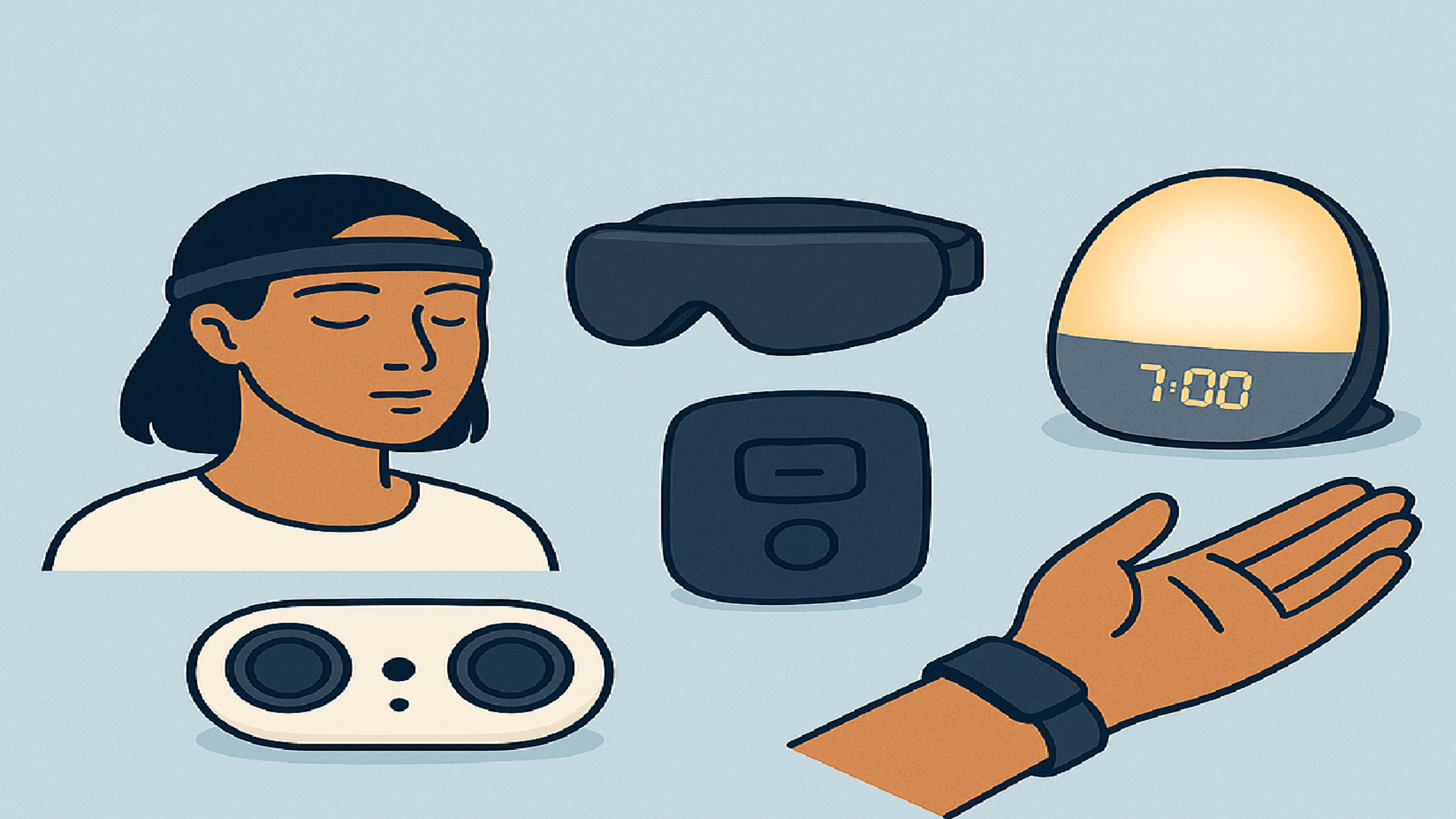
Stress-Relief Gadgets That Help You Unwind
Everyday tools that may make it easier to relax, slow racing thoughts, and wind down before sleep.

Healthy Late-Night Snacks That Feel Filling
Easy snack ideas with protein and fiber that work well when you want something light late at night.